Buying a House in Chubbuck: What to Check on the HVAC
Chubbuck turns over a lot of houses. It sits right up against Pocatello, most of the stock is ranch and split-level built from the 1970s on, and the newer subdivisions keep filling in around the edges. For a buyer that means one thing. Whatever furnace and whatever ductwork you end up with, somebody else chose it and somebody else maintained it or did not, and you inherit all of it the day you get the keys.
I am Larry with Falls 2 Falls. I get called out to Chubbuck houses a few weeks after closing far more often than I get called before. This is the version I would give you over the phone while you were still inside your inspection window. It is not legal advice and it does not replace your agent or your inspector. It is what I look at on a system I have never seen before.
What a general home inspection does, and does not do, with the HVAC
Home inspectors do real work and the ones I run into around Bannock County do it well. The limit is scope. A general inspection covers an entire house in a few hours, so the heating and cooling portion is a functional check. They run the system, confirm it makes heat or cool air, look at the visible venting and the general condition of the equipment, note the age if the label is readable, and flag anything obviously wrong. That catches real problems.
What it usually does not include is a combustion analysis, a static pressure reading across the blower, a camera look at the heat exchanger, a refrigerant charge check, or any measurement of how much air is reaching the far bedrooms. Most inspectors say as much themselves and write recommend evaluation by a licensed HVAC contractor into the report. On a system past twelve or fifteen years, that line is worth acting on.
The data plate is the most useful thing you can read yourself
Open the furnace closet or walk around to the outdoor unit and find the metal label. Model number, serial number, input and output in BTU, and on the condenser the tonnage and the refrigerant type. Photograph all of it. The serial is usually how the unit gets dated, and the manufacturer’s own documentation or support line is the place to confirm what those digits mean, because the format changes by brand and by decade.
Age tells you something and it does not tell you everything. Eighteen years is not automatically bad, and I have condemned units at nine. What age gives you is a planning horizon. It tells you whether you are buying a system with most of its life ahead of it or one you should be setting money aside for, and whether parts are still easy to come by, which matters more than people expect on a Saturday in January.

Questions worth asking the seller
Your agent can pass these through. The answers matter less as facts than as a picture of how the house was treated.
- Service history. Receipts, a sticker on the furnace door, a company name. A system with any paper trail behind it has almost always been looked after better than one without.
- Whether the duct has ever been touched. Added returns, a run moved during a remodel, a finished basement tied into the original trunk. This one question explains most of the comfort complaints I hear in this housing stock.
- What was replaced and when. A furnace swapped alone, a condenser swapped alone, or the two done together. Dates and pairings tell you whether anyone ever looked at the system as a whole.
If the answer to all of it is that they do not know, that is not a red flag on its own. It is common. It just means the data plate is the only history you have.
The crawlspace is where the real story is
Almost every ranch and split-level here sits on a crawlspace, and that is where the ductwork lives. It is also the one place buyers never go, and I understand why. It is tight, it is dirty, and the hatch is usually in the floor of a closet. But an hour under the house tells me more than an hour standing in front of the furnace.
What I am looking for down there is flex duct pulled loose at a boot or sagging until it collapses on itself, insulation fallen off a trunk line, joints that were never sealed, standing water or a torn vapor barrier, rodent damage, and whether a real return path was ever built. At this elevation on the Snake River Plain, leaky duct in a cold crawlspace pours the heat you paid for into a space nobody lives in, every hour of every winter night.
If the duct turns out to be the actual problem rather than the furnace, that is a different conversation and often a better place to put the money. I cover what that work involves on the duct replacement in Chubbuck page.
Sizing, and the previous owner’s straight swap
Here is a pattern I run into constantly. The original furnace was oversized when the house went up. It died twenty years later, someone read the old label and put in the same size again, because that is fast and nobody complains on install day. Two owners on, that first guess is still running your house.
Oversized heat short cycles. It blasts, satisfies a thermostat sitting in the hallway, shuts off, and the back bedroom never catches up. You get swings, noise, and wear on the ignition parts from starting and stopping all day. The tell is very short burner cycles on a cold morning. If you are in the house during the inspection, stand there and listen to one full cycle.
None of that makes the house a bad buy. It means that when the system does get replaced, it should be sized with a real load calculation for the house as it stands today, insulation and windows and finished basement included, instead of copied off the old plate.
Buyers ask me whether the furnace is good. The more useful question is whether the system suits the house. Those are different questions, and the second one decides how the place actually feels in January.
You are buying in one season and cannot test the other
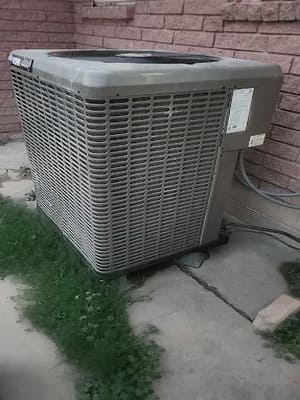
Most closings here land in months where only half the system can be run. You cannot safely test a condenser at thirty degrees, because the compressor and the oil are not meant to start cold and forcing it can do damage. August tells you very little about a furnace either.
A technician can still infer a good deal. Looking at cooling in cold weather, I check the condenser’s physical shape, the coil for damage and debris, the line set and its insulation, the disconnect and contactor, the electrical connections, and whether the pad has settled. Looking at heating in summer, I can inspect the heat exchanger, burners, venting, and blower, and run it briefly on a cool morning. Neither one is a full performance test, and I would rather say that plainly than pretend otherwise.
What is worth raising and what is normal wear
This is where buyers get tangled, and where I try to be honest even when it is not the answer someone wants. Not every finding is a credit.
What I would put in front of your agent: a cracked or suspect heat exchanger, venting that is not right, a system that will not make heat or cool air at all, a condenser that has been struck or has a dead compressor, duct that has come apart, or unsafe electrical connections. Those are conditions rather than age.
What is usually a fifteen-year-old system being fifteen: a weak capacitor, a contactor with pitted points, a dirty blower wheel, surface rust on the cabinet, a coil that wants cleaning, a thermostat from another decade. Those are maintenance items you would expect on equipment of that vintage, and asking for a replacement over them tends to go nowhere. Knowing about them before you own them is the real value.
Plan the first year before the first hard freeze
Once you close, you own a system with no maintenance record. Even if it ran fine on inspection day, get a baseline visit on the calendar before the cold arrives. That is the difference between finding a weak igniter in October and finding it at two in the morning in January with the wind coming across the plain.
A baseline visit on a house you just bought means cleaning and checking the burners and flame sensor, verifying the safeties, reading the temperature rise, looking at the blower and the filter setup, and then telling you in plain words what shape you are in and what to plan for. That is what a furnace tune-up in Chubbuck covers, and the rest of what I handle around town is on the Chubbuck, ID page. To have a system looked at before you close, reach me through the contact page or by phone.
Frequently asked
Do I need a separate HVAC look when buying in Chubbuck?
If the equipment is past roughly twelve years, or if the inspection report recommends evaluation, it is worth it. A general inspection is a functional check across the whole house. A separate look goes into the heat exchanger, the combustion, the crawlspace duct, and the airflow. On a newer system in obvious good shape, it is often unnecessary, and I will tell you that.
How do I find out how old the furnace is?
Photograph the data plate and note the model and serial number. The serial usually carries the build date, but the format varies by manufacturer, so confirm it against that manufacturer’s own documentation or support line rather than guessing from the digits.
Can you check the air conditioner in the middle of winter?
Not fully. Running a condenser in cold weather risks damaging the compressor, so I do not do it. I can go over the unit’s condition, the coil, the line set, the electrical, and the age, then give you an honest read on what I can and cannot know until spring. Call (208) 681-2884 and I will walk you through it.
Buying in Chubbuck? Get the system looked at before you close.
Call (208) 681-2884