Chubbuck Subdivisions Are Aging Out in Waves
Chubbuck did not grow evenly. It grew in bursts. A field north of Hiline turns into thirty houses over two summers, then the next stretch fills in a decade later, then another pocket goes up on the Pocatello side after that. Drive the town and you can read the eras off the rooflines, ranches and split-levels from the seventies sitting a few blocks from subdivisions that are barely out of their first paint job.
That growth pattern has a consequence most homeowners never think about until it lands on them. The furnaces and air conditioners that went in when those houses were framed also went in as a group. They were installed within a couple of summers of each other, they ran the same winters and the same Julys, and they wear out on roughly the same schedule. So it is not one house at a time out here. It is a street at a time.
A three-year build window makes a three-year replacement window
Nobody sets out to synchronize a neighborhood’s equipment, but that is what happens. A builder puts up a subdivision inside a short window, buys the mechanical packages the same way for every lot, and hands over houses that are mechanically identical. Fifteen to twenty years on, which is the range people generally talk about for original-to-build equipment, that whole batch starts showing its age at once. No unit owes you a fixed number of years, and I have seen well-installed systems run past what anyone expected while a neglected one on the same block quits early. But the pattern holds often enough to plan around.
On the Snake River Plain the equipment also works harder than the averages suggest. We are at about 4,400 feet, we get sub-zero stretches that keep a furnace running for days without much of a break, and then we swing into hot, dry summers where the AC carries the afternoon. Both sides of the system get a full workload every single year. There is no shoulder climate here where things coast.
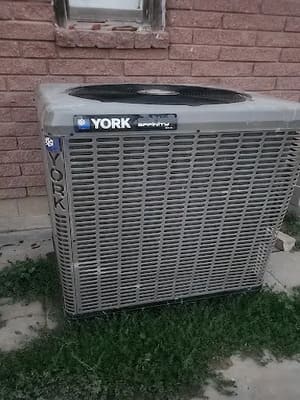
What the wave does to the calendar
Here is the practical part. If your neighbors’ systems are the same age as yours, they are going to fail in the same weather you do. The first hard cold snap of the season lights up the phone, and so does the first stretch of high nineties. That is true every year in this trade, but in a cohort neighborhood it stacks, because ten houses on one loop are all sitting on the same tired equipment waiting for the same trigger.
What that means for you is simple. The homeowner who decides in September picks the day. The homeowner who decides in January takes whatever day is open, and January in Bannock County is a rough week to be without heat while parts get sourced. Same story in reverse in July.
Reading where your own system sits
You do not need me in your basement to get a rough sense of where you stand. Four things tell most of the story.
- The data plate. There is a label on the furnace cabinet and on the outdoor unit with a model and serial number, and usually a date. Sometimes the year is spelled out, sometimes it is coded into the serial. That is the single most useful fact you can gather in two minutes with a flashlight.
- The sound at startup. Listen when it kicks on rather than when it is already running. A hard clunk, a groan before the blower spins up, or a rattle that settles after ten seconds tells you something is working harder to get going than it used to.
- The worst day of each season. A system can look fine for eleven months and still be finished. The test is the coldest morning in January and the hottest afternoon in July. If it holds the house on those two days, it is keeping up. If it runs continuously and still drifts off the setpoint, it is out of capacity.
- The repair history. One part in fifteen years is normal. Two parts in two seasons is a pattern, and the pattern usually continues, because the components that follow a failed one are the same age as the one that failed.
Repair or replace, both directions
I will say this plainly because plenty of people in this trade will not. A repair on an older unit is often the right call. If a fifteen-year-old furnace has had an easy life, it holds the house on the cold mornings, it is not throwing errors, and it needs an igniter or a pressure switch, fix it. That is a sensible piece of maintenance on equipment that still does its job, and replacing it out of nervousness is a waste of a working machine.
The line moves when the repair is expensive relative to what is left, when the failed part is a major one like a heat exchanger or a compressor, when the unit has already needed work two or three times recently, or when it no longer keeps up on the worst day. At that point you are paying to extend something that is going to ask again soon, and you are doing it on the failure’s schedule rather than yours.
Getting told your system has years left is a real answer. If I look at your equipment and it is fine, I would rather tell you that and see you again in five years than sell you a replacement you did not need.
The furnace and the AC are one system
This catches people. A central air conditioner in a Chubbuck house is not a standalone appliance. The outdoor condenser is paired with an evaporator coil that sits in your furnace cabinet, and the furnace blower is what moves the cooled air through the house. Heating and cooling share hardware.
So when the AC gives out on a system where the furnace is the same age, the honest conversation is about both. A new outdoor unit matched to an old indoor coil does not perform the way the pairing was designed to, and you are opening the same cabinet again in a year or two when the furnace goes. Sometimes replacing one alone is still right, particularly if the other piece was already changed at some point. But it deserves to be a decision you make on purpose rather than one you find out about later. You can read how I handle HVAC installation in Chubbuck when a full pairing is the answer.

Do not repeat the original sizing mistake
Here is something worth knowing about the newer subdivision stock in this town. A lot of that equipment was sized off square footage, because that is fast on a production schedule with twenty houses to finish. Square footage alone does not account for how the house faces, the windows, how the insulation actually went in, or the fact that we sit at 4,400 feet where thinner air changes how a condenser sheds heat.
Which means a straight swap, pulling the old box and setting the same size back down, can bake the original mistake in for another twenty years. If your house has always had a bedroom that never gets comfortable, that is worth sorting out at replacement time instead of inheriting it again. I run a load calculation on the actual house so the new equipment fits what is there rather than what a chart says. If you are dealing with a system that is limping rather than dead, AC repair in Chubbuck is often the right first stop.
Plan it instead of reacting to it
If your system is in that fifteen-plus window and you have gone through the four signs above, nobody is telling you to replace it tomorrow. Know where you stand, get an honest set of eyes on it before the season turns, and pick a timeline you control. Spring and fall are the calm stretches around here, and that is when you get to take your time on the decisions.
You can see everything I cover across Chubbuck, ID, or reach me through the contact page and we will get you a straight read on what you have.
Frequently asked
How do I find the age of my furnace?
Look for the manufacturer’s label on the cabinet, usually inside the front panel or on the side. Most list a date directly, and where they do not, the year is often encoded in the first four digits of the serial number. Snap a photo of the whole label and I can read it for you.
My neighbor just replaced theirs. Does that mean mine is next?
It means it is worth checking, not that yours is finished. Identical houses on the same street still get different maintenance, different thermostat habits, and different sun exposure. What your neighbor’s replacement really tells you is that your cohort has reached the age where this becomes a live question.
Can I replace just the AC and leave the furnace?
Sometimes, yes. It depends on the condition and age of the furnace and whether the indoor coil can be properly matched to the new outdoor unit. If the furnace has real life left, I will say so. If it is the same vintage and already struggling, doing both at once usually saves you from opening the same cabinet twice.
When should I schedule a replacement in Chubbuck?
Spring or fall, before the weather forces the issue. You get better scheduling flexibility, more time to weigh options, and the system is tested and running well before the first sub-zero week or the first serious heat.
Is it worth fixing an older unit at all?
Often it is. If the repair is minor, the unit still holds your house on the coldest and hottest days, and it has not been in for work recently, a fix is the sensible call and I will make it. The point of looking closely is to know which situation you are actually in rather than guessing.
System aging out in Chubbuck? Get a real quote for your home.
Call (208) 681-2884