Farm Dust Is What Kills Your System in Chubbuck
Chubbuck sits right at the edge of farm country. Drive a few minutes in most directions off Yellowstone or Hiline and you are looking at open ground, and that ground moves. Between spring tillage, harvest, and the wind that runs the length of the Snake River Plain, the air here carries a fine mineral grit that gets into everything, including the furnace and air handler in your utility room. Most homeowners never connect the two. They know the house gets dusty. They do not know the same dust is why their equipment is on its second blower motor and still struggling to keep up. Here is what is actually going on inside the machine.
Where the dust actually comes from
This is not household lint. It is soil. Bannock County farm ground gets worked in spring, worked again through the season, and stripped at harvest, and at roughly 4,400 feet with the humidity we have, that soil dries out fast and stays airborne once the wind picks it up. The plain gives that wind a long, flat run at us, so what leaves a field east of town does not settle politely at the property line.
The important part for your equipment is that the load is not steady. It spikes. A calm week in June barely registers. A dry, breezy stretch in late August or a hard week of harvest traffic can put more grit through your return in ten days than the previous two months combined. That is why a filter that looked fine on the first of the month can be gray and stiff by the twentieth, and why a maintenance schedule built around a calendar alone misses the worst of it.
How it gets into a supposedly sealed system
People assume the filter is a gate. It is closer to a suggestion, depending on how the system was installed. Three things let dust walk right past it.
Return leaks. Return duct runs under negative pressure, so anything not sealed tight is actively sucking. A return running through a crawlspace or an unconditioned garage wall pulls whatever is down there straight into the blower, upstream of the filter in a lot of setups. That is dirt, insulation fiber, and whatever blew under the house last fall.
Filter bypass. A filter that is a hair short in its track, a rack with no gasket, or a slot with an open gap on one side gives air an easier path around the media than through it. Air is lazy and always takes it. The filter can look clean for months and be doing very little, which is the frustrating version of this problem.
Duct gaps. Older Chubbuck homes with duct running through crawlspaces or unfinished basements often have joints that were taped once, decades ago. Tape lets go. Every open seam is another intake.
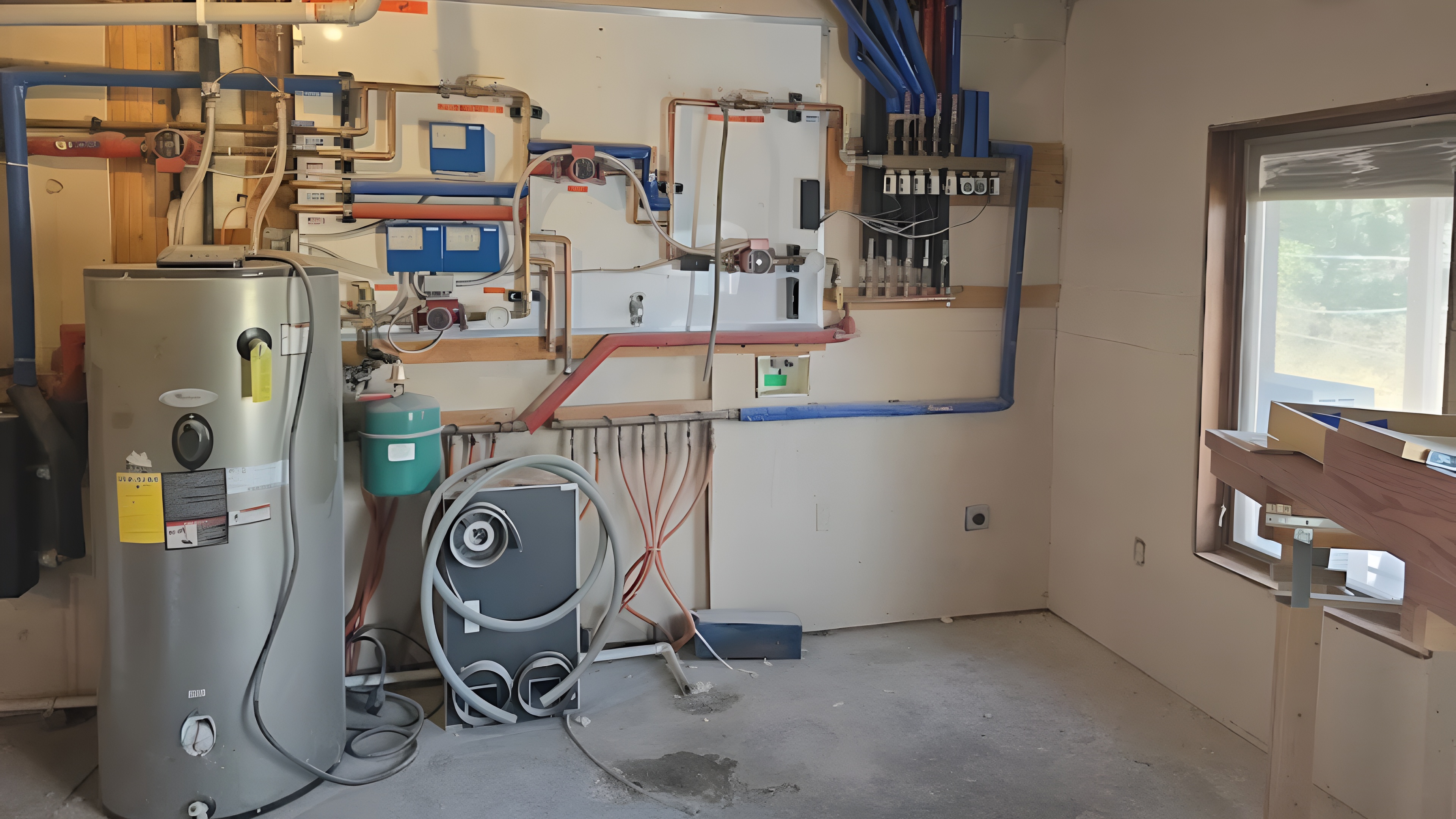
What the dust does once it is inside
It coats the evaporator coil
The indoor coil is a dense stack of aluminum fins that has to hand heat off to the refrigerant. Dust plus condensation makes a paste that packs into those fins and hardens. Once that film is there, the coil cannot move heat and cannot pass air, so the system runs longer for less cooling, pressures go where they should not, and on a hot week the coil can ice over. Nobody sees it happen because the coil is buried inside the cabinet.
It fouls the flame sensor
In heating season, the flame sensor is a small rod sitting in the burner flame that proves the flame is really there. A film of dust and combustion residue insulates that rod, the signal drops below what the board will accept, and the board shuts the gas off. You get ignition, a few seconds of flame, then nothing. Repeat that a few times and the furnace locks out. It reads like a dying furnace and is usually a five-minute cleaning.
It loads the blower wheel
This is the quiet one. The blower wheel has curved blades, and dust builds on each blade until the wheel is effectively a smaller wheel. Airflow drops gradually, and because it drops evenly across the house, nobody notices. There is no bad vent, no obvious symptom. The system just moves less air, runs longer, and works the motor harder for years.
By the time a Chubbuck homeowner calls about performance, the coil and the blower wheel have usually been loading up for several seasons. The failure is sudden. The cause never is.
A dusty house is usually a duct problem
If you dust the shelves on Saturday and it is back by Wednesday, the instinct is to blame the housekeeping or buy a better filter. Neither one is the issue. A system with leaky return duct is pulling crawlspace and wall-cavity air into your ductwork and then distributing it through every register in the house. You are not fighting dust that came in the front door. You are fighting dust your own system is delivering, room by room, every cycle.
That is worth testing before you spend money on filtration. If the duct is the source, sealing it does more than any filter will, and a badly deteriorated system is a candidate for duct replacement in Chubbuck rather than another round of patching.
Filters, and the tradeoff nobody explains
Here is the honest version. A denser filter catches smaller particles. It also resists airflow more, and your equipment was designed around a certain amount of resistance. Push past that and you starve the blower: less air over the coil in summer, less air over the heat exchanger in winter, higher static pressure, more strain on the motor. People install the thickest filter on the shelf to fight the dust and end up causing the exact restriction they were trying to prevent.
So the answer here is rarely a denser filter. It is a properly sized filter, fitted tight with no bypass, changed more often. Interval beats density every time in this valley, because our problem is volume of ordinary soil, not exotic fine particulate. If you want better filtration than your system currently handles, that is a conversation about filter area and cabinet capacity, not a swap you make at the hardware store on a Saturday.
A filter rhythm that fits this valley
- Look at it monthly, year round. Not to change it, just to look. You will learn your own house fast.
- Change it on appearance, never on the box. The interval printed on the sleeve assumes suburban air somewhere else.
- Tighten up during harvest and any dry windy stretch. Those weeks do most of the damage.
- Fit matters as much as the filter. If it rattles in the track or leaves a gap, it is being bypassed.
What a coil cleaning involves, and when it is worth it
Cleaning an indoor coil is real work. The coil has to be reached, which sometimes means pulling panels and occasionally cutting an access opening that gets closed back up properly. The fins get treated with a cleaner suited to the buildup, rinsed or brushed depending on how bad it is, and the drain pan and line get cleared so what comes off the coil actually leaves the house. The blower wheel usually comes out and gets cleaned the same visit, since there is little point doing one and not the other.
It is worth doing when the system is running longer than it used to, when airflow at the registers has faded, or when a technician looks at the coil face and finds it matted rather than dusty. On a lightly loaded coil it is not urgent. In a Chubbuck home with duct in a crawlspace and fields nearby, it comes due sooner than most people expect.
The timing that matters here
Late fall is the window. Get the system serviced after harvest is finished and before the first hard cold, and you are clearing out the entire season’s accumulation right before the furnace has to work for four straight months. Do it in September and you catch the dust before harvest puts more through. Do it in January and you have already run the whole heating season with a dirty flame sensor and a loaded blower.
That timing is the whole argument for a fall furnace tune-up in Chubbuck. If you want to see everything we cover around town, the Chubbuck HVAC service page lays it out, or reach us through the contact page and we will get you on the schedule.
Frequently asked
How often should I change my filter in Chubbuck?
Check it monthly and change it when it looks loaded rather than when the calendar says so. In harvest season and dry windy stretches, many homes here go through filters considerably faster than the sleeve suggests.
Will a higher-rated filter protect my system from field dust?
Not reliably. A denser filter restricts airflow, and if your equipment was not designed for that resistance you trade dust for strain on the blower and the coil. Correct size, tight fit, and shorter intervals do more.
My furnace lights and then shuts off after a few seconds. Is that dust?
Very often it is a dirty flame sensor, which is a common result of dusty air. It can also be a venting or gas issue, so it is worth a diagnosis rather than a guess.
Why is my house dusty again two days after cleaning?
Usually leaky return duct in a crawlspace or wall cavity, pulling unconditioned air into the system and distributing it through every register. That is a duct issue, not a housekeeping one.
When should I schedule service for the year?
After harvest and before heating season. Late fall clears the season’s buildup right before the furnace does its hardest work, and it is the single best-timed visit for a home out here.
Fighting Chubbuck field dust? Book a tune-up.
Call (208) 681-2884